
Is Toe Walking Normal? A Parent’s Quick Guide
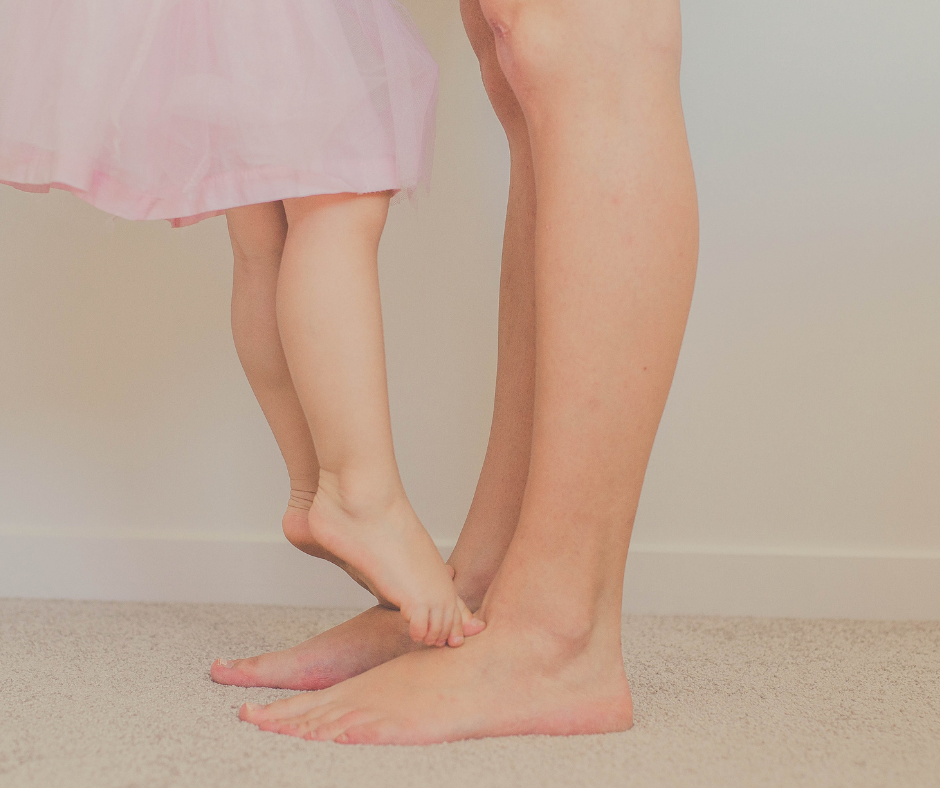
Toe Walking: What Parents Should Know
Many children walk on their toes when they first learn to walk. In most cases, this is normal and usually goes away as balance, strength, and coordination improve. By age 2–3, most children develop a typical heel-to-toe walking pattern.
If toe walking continues beyond the toddler years, it may become harder to change and can lead to tight muscles, balance challenges, or difficulty keeping up with peers.
Why Do Some Kids Toe Walk?
Toe walking can happen for several reasons, including:
Habit or muscle memory
Tight calf muscles or a shortened Achilles tendon
Sensory differences (seeking or avoiding sensations)
Developmental differences
Rarely, underlying medical conditions
Sometimes there is no clear cause — this is called idiopathic toe walking.
Idiopathic toe walking will have a bilateral and symmetrical presentation (toe walking on both feet), as opposed to some other neurologic conditions, which may cause unilateral or asymmetric toe walking (toe walking only on one foot).
When Should Parents Seek Help?
Consider an evaluation if your child:
Toe walks most or all of the time
Is older than 2–3 years and still toe walking
Has tight muscles or difficulty putting heels down
Falls often or struggles with balance
Walks on one foot only
Suddenly starts toe walking after previously walking normally
Persistent toe walking may benefit from professional support.
How Therapy Can Help
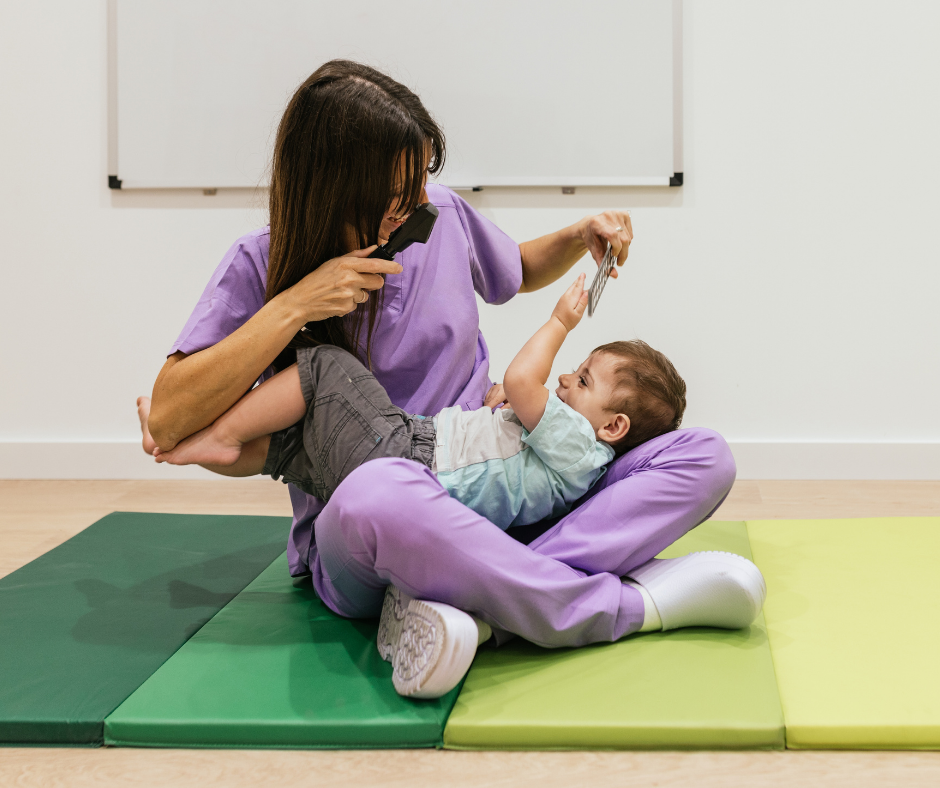
Pediatric physical therapy can improve walking patterns and prevent long-term problems. Treatment may include:
Stretching tight muscles
Strengthening legs and core
Improving balance and coordination
Practicing heel-to-toe walking
Orthotics or braces, if needed
Early support often leads to the best outcomes.

What You Can Do at Home
Encourage activities and exercises that promote flat-foot walking, balance, and leg strength.
In a positive way, remind your child to “walk with flat feet.”
Consistency and practice make a big difference.
Exercises to Try at Home
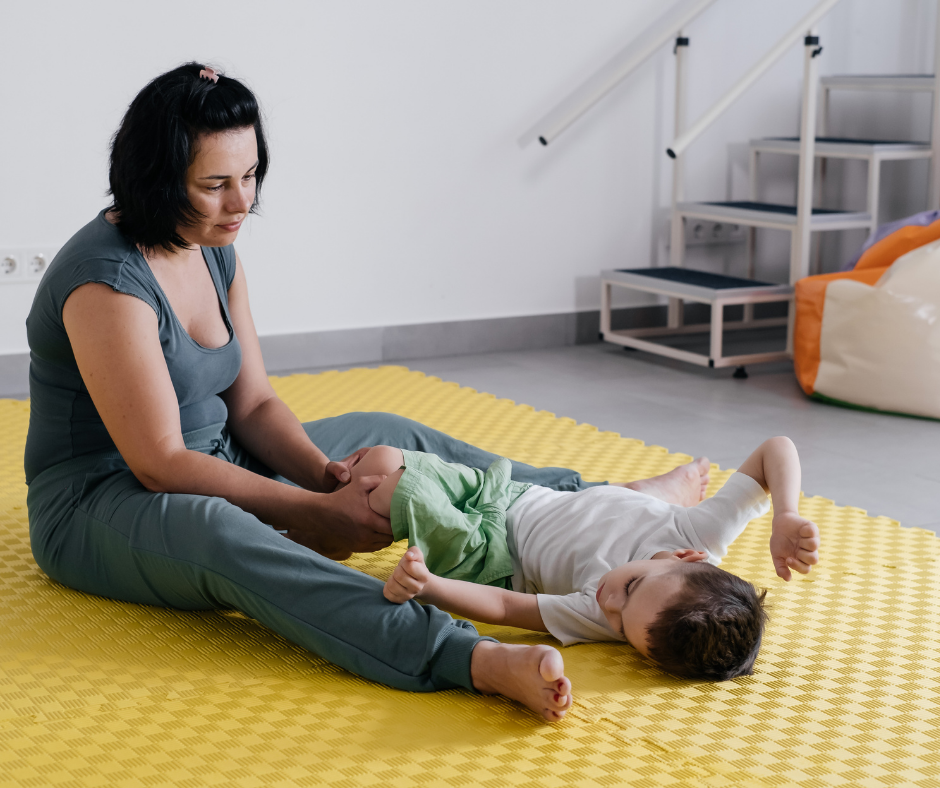
HAMSTRING STRETCH
Have your child lie on their back with their legs straight. Have them kick one leg up to a 90 degree angle. Support at the top of their thigh with one hand, then gently push at the back of their ankle in an attempt to straighten their leg. Hold for 30-60 seconds as tolerated on each leg. Your child should feel a “pulling” feeling in their hamstring muscle at the back of their thigh.

STANDING ON ONE FOOT
Keeping their toes straight ahead, have your child stand on one foot for 5-10 seconds. If they are unable to do this independently, have them balance their foot on a ball. Complete on both feet. Increase the time as they are able. If this is too easy, you can try standing on one foot on an unstable surface, like a pillow.
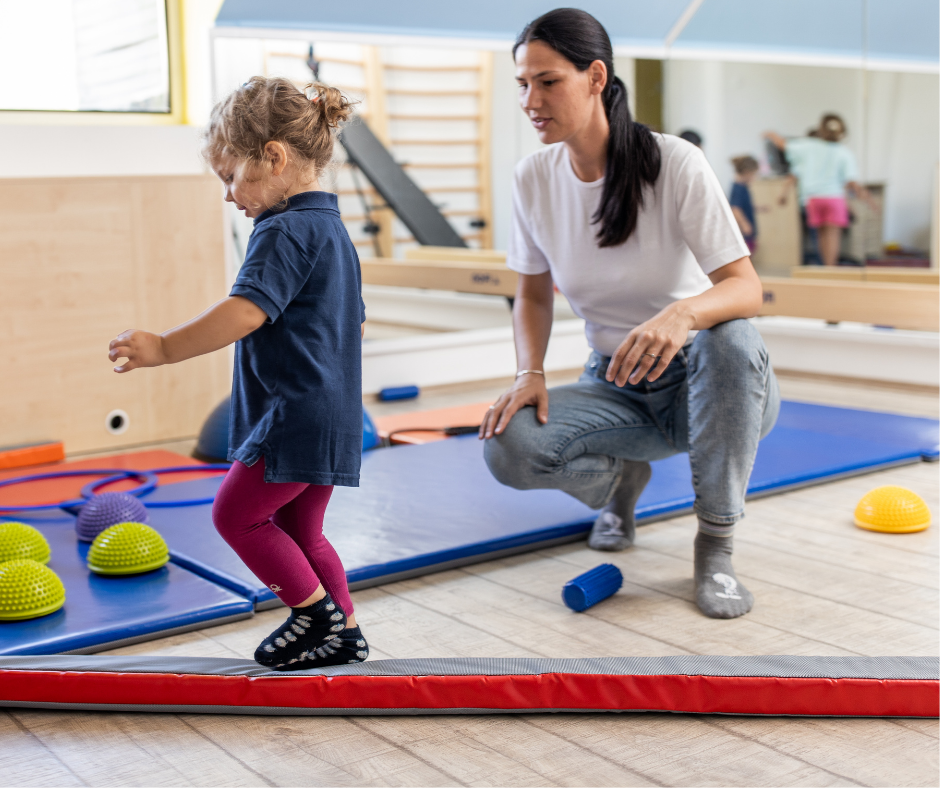
WALKING ON A CURB OR BALANCE BEAM
Have your child walk slowly along a curb, wooden board, or even a line like it is a balance beam. Encourage them to take large steps and walk with a “heel-toe” pattern. Children who toe walk will attempt to rush through this activity, taking small steps, and shuffle feet. Hold their hand if they struggle with this activity.

HEEL CORD STRETCH
Have your child lie on their back with their leg straight. Use one of your hands to stabilize their heel and use your other hand to gently push their toes toward their shin. Hold for 30-60 seconds as tolerated on each leg. Your child should feel a “pulling” feeling in their calf muscle.
Keep in mind that toe walking can be challenging to address, and it may take months or even years for your child to re-train their body to walk exclusively with a heel-toe pattern.
Have questions or concerns? Get in touch with one of our therapists!